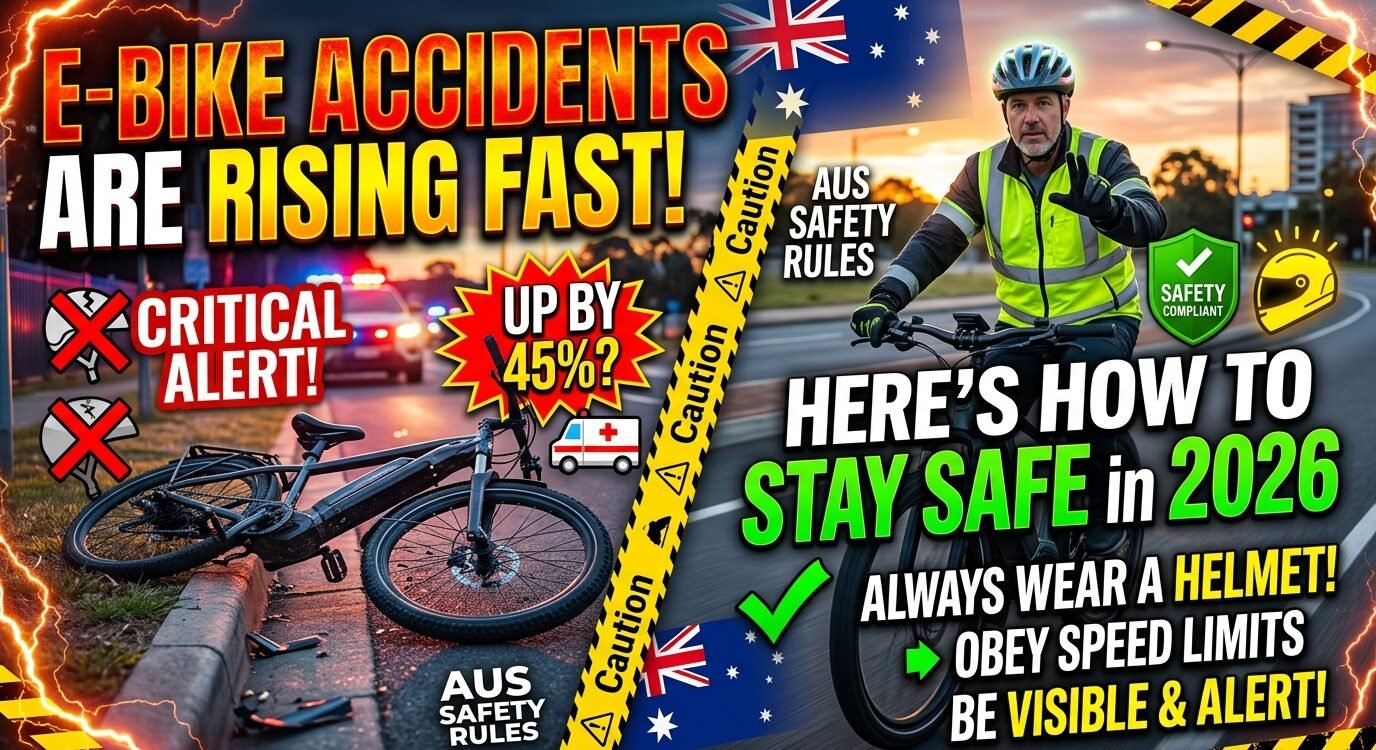

E-Bike Accidents Are Rising Fast | Here’s How to Stay Safe in 2026
E-bike accidents Australia has become an increasingly important safety topic as electric bikes become more powerful, heavier and more popular. Australian authorities are reporting growing concerns about serious injuries, deaths and battery-related fires involving e-bikes and other electric mobility devices. The ACCC says improving e-bike safety is now its first priority as it works toward nationally consistent safety standards.
However, there is an important distinction. Not every accident involving an electric bike is caused by the technology itself. Rider behaviour, excessive speed, poor maintenance, unsafe modifications, traffic conditions and inappropriate riding areas can all contribute to crashes.
The good news is that many common risks are preventable.
Whether you ride a commuter e-bike, electric mountain bike, folding e-bike or a high-performance electric dirt bike, following a few basic safety principles can dramatically reduce your risk.
Why E-Bike Accidents Are Becoming a Bigger Concern
Electric bikes can travel faster and accelerate harder than conventional bicycles. They can also be considerably heavier.
That changes how the bike behaves.
A heavier bike travelling at speed requires more braking distance. Likewise, a powerful motor can accelerate a rider into a dangerous situation before they have time to react.
The ACCC has specifically raised concerns about overpowered e-bikes capable of speeds far beyond conventional bicycle assistance limits. It also highlights fire risks associated with poor-quality, incompatible or damaged lithium-ion batteries.
Therefore, choosing the right bike is the first part of staying safe.
Choose a Compliant Electric Bike
One of the easiest ways to reduce risk is to buy an electric bike designed for its intended use.
For conventional road-going e-bikes, Australian requirements generally centre around pedal assistance, a 250W continuous-rated motor and assistance that cuts out at 25 km/h, although exact rules can vary between jurisdictions.
Victoria, for example, states that e-bikes must meet the applicable requirements to be ridden legally on public roads, paths and other road-related areas.
Queensland also makes an important distinction between compliant e-bikes and electric motorcycles that may look like bicycles but are actually high-powered motor vehicles.
This distinction is particularly important for buyers considering machines such as Sur-Ron, Talaria and Segway electric dirt bikes.
A high-performance e-moto is not automatically a road-legal bicycle.
Always Wear the Correct Helmet
A helmet is your most important piece of protective equipment.
Australian bicycle helmet requirements apply to riders of bicycles, including electric bicycles. The ACCC’s mandatory helmet standard covers the design, construction, performance, testing and safety markings of bicycle helmets.
Your helmet should:
- Fit securely
- Sit level on your head
- Have the retention strap correctly adjusted
- Be appropriate for your type of riding
- Be replaced after a significant impact
For higher-speed off-road riding, consider upgrading your protection with a full-face helmet and additional body armour.
Control Your Speed
Speed is one of the biggest factors affecting the severity of a crash.
You should always ride at a speed appropriate for:
- Pedestrians
- Traffic
- Visibility
- Weather
- Road surface
- Trail conditions
- Your riding ability
A bike that feels stable at 25 km/h can behave very differently at 40 km/h or more.
Remember that braking distance increases as speed increases.
For example, don’t enter a blind corner at a speed where you cannot stop if a pedestrian, vehicle, animal or obstacle suddenly appears. click here
Learn to Brake Properly
Good brakes are only useful if you know how to use them.
Modern electric bikes often use hydraulic disc brakes, which provide strong and controlled stopping performance.
However, riders should practise:
- Progressive braking
- Using both brakes
- Emergency braking
- Braking before corners
- Maintaining control on loose surfaces
Avoid grabbing the front brake suddenly while turning or riding over loose terrain.
Instead, practise controlled braking in a safe open area before riding in heavy traffic or technical terrain.
Check Your Tyres Before Every Ride
Tyres are your connection with the road or trail.
Incorrect tyre pressure can reduce:
- Grip
- Cornering stability
- Braking performance
- Battery efficiency
- Overall handling
Inspect tyres for cuts, cracks, embedded objects and excessive wear.
For off-road electric bikes, choose tyres suited to the terrain. A motocross-style tyre designed for dirt is not necessarily appropriate for asphalt commuting.
Battery Safety Is Critical
Battery safety deserves special attention.
Modern e-bikes use lithium-ion batteries, which can store a substantial amount of energy. Damaged, poorly manufactured or incompatible batteries and chargers can create serious fire risks.
Victoria Police recommends using the supplied charger or a compatible charger that matches the battery specifications. It also advises charging on a flat, hard surface rather than flammable materials such as carpet, and not using damaged batteries or chargers.
Follow these rules:
- Use the correct charger
- Never use a damaged battery
- Don’t modify battery wiring yourself
- Don’t charge on a bed or carpet
- Keep charging areas clear
- Inspect plugs and cables
- Disconnect the charger when fully charged
- Follow the manufacturer’s storage instructions
Never ignore a battery that becomes unusually hot, swollen, damaged or produces an unusual smell.
Avoid Illegal Performance Modifications
One of the biggest safety problems currently facing the Australian e-bike market is the modification of bicycles beyond their intended specifications.
Examples include:
- High-power conversion kits
- Unapproved batteries
- Modified controllers
- Speed-limit removal
- Non-compatible chargers
- Homemade battery packs
The ACCC has raised concerns about overpowered e-bikes being used in public areas, including models exceeding 1,000W and speeds above 50 km/h.
A modification that increases performance can also change the legal classification of the vehicle.
More power is not automatically better.
Be Extra Careful Around Pedestrians
Shared paths require patience.
When approaching pedestrians:
- Reduce your speed.
- Give an audible warning.
- Leave plenty of space.
- Be prepared to stop.
- Never assume a pedestrian has seen you.
NSW guidance specifically instructs e-bike riders to keep left and give way to pedestrians on shared paths.
Victoria provides similar guidance, including slowing down and using a bell when passing pedestrians.
Make Yourself Visible
Visibility becomes especially important at night and during poor weather.
Use:
- Front lights
- Rear lights
- Reflective equipment
- Bright clothing where appropriate
Check that your lights are working before leaving home.
Also remember that being visible does not mean you automatically have right of way. Continue watching vehicles and pedestrians closely.
Ride Defensively Around Cars
Intersections are particularly dangerous.
When approaching a driveway, intersection or roundabout:
- Slow down
- Look for turning vehicles
- Make eye contact where possible
- Assume a driver may not see you
- Keep both hands ready on the controls
Never assume that because you have the legal right of way, a vehicle will actually give way.
Defensive riding is about avoiding the crash rather than proving who was legally responsible afterward.
Electric Dirt Bikes Need Different Safety Equipment
If you’re riding a Sur-Ron, Talaria, Segway or another high-performance electric dirt bike, bicycle-level protection may not be enough.
For serious off-road riding, consider:
- Full-face helmet
- Goggles
- Gloves
- Knee protection
- Elbow protection
- Riding boots
- Chest protection
- Appropriate riding clothing
These bikes can deliver substantially more acceleration and speed than conventional commuter e-bikes.
Ride them in the environment they were designed for and follow the applicable land-access rules.
Inspect Your E-Bike Before Every Ride
A quick pre-ride inspection can prevent mechanical failures.
Check:
Brakes: Firm lever feel and adequate pad condition.
Tyres: Correct pressure and no visible damage.
Wheels: No excessive movement or loose spokes.
Battery: Securely mounted with no visible damage.
Chain: Clean, lubricated and correctly tensioned.
Controls: Throttle or pedal-assist controls operating normally.
Lights: Front and rear lights functioning.
Bolts: No obvious loose components.
This takes only a few minutes.
What To Do After an E-Bike Crash
If you crash, don’t immediately continue riding.
First:
- Move to a safe location if possible.
- Check yourself for injuries.
- Check other people involved.
- Contact emergency services when necessary.
- Inspect the bike before riding again.
- Have damaged components professionally assessed.
Pay particular attention to the battery after a crash.
A battery can suffer internal damage even when the outside casing appears intact.
If there is visible battery damage, swelling, smoke, unusual heat or an unusual smell, stop using it and seek professional advice.
The Safest E-Bike Is the Right E-Bike
There is no single electric bike that is safest for everyone.
A commuter needs different equipment from an off-road rider.
For commuting, prioritise:
- Compliance
- Reliable brakes
- Good lighting
- Comfortable geometry
- Quality tyres
- Reliable battery systems
For mountain riding, prioritise:
- Suspension
- Hydraulic brakes
- Appropriate tyres
- Strong wheels
- Protective equipment
For electric dirt bikes, prioritise:
- Correct riding environment
- Protective gear
- Mechanical condition
- Battery safety
- Responsible riding
The right bike makes safe riding easier.
Why Buy From ELECTRICK PTY LTD?
At ELECTRICK PTY LTD, we understand that electric bikes range from everyday commuter machines to high-performance electric dirt bikes and e-motos.
Our range includes electric bikes, electric dirt bikes, performance components and accessories from recognised brands.
If you’re unsure whether a particular model is suitable for road use, commuting or off-road riding, check the vehicle’s specifications and intended classification before purchasing.
Frequently Asked Questions
Are e-bike accidents increasing in Australia?
Australian authorities are reporting increasing concern about injuries, deaths and safety incidents involving e-bikes and other e-micromobility devices. The ACCC is developing nationally consistent safety standards, with e-bikes the first priority.
What is the biggest cause of e-bike accidents?
There is no single cause. Speed, rider behaviour, poor visibility, road conditions, mechanical problems, unsafe modifications and interactions with vehicles or pedestrians can all contribute.
Do I legally need a helmet on an e-bike in Australia?
Yes. Bicycle helmet requirements apply to e-bike riders, with the applicable Australian helmet standards and state or territory road rules determining the specific requirements.
Are powerful e-bikes more dangerous?
Higher power and speed can increase risk because acceleration, stopping distances and vehicle weight can all increase. The ACCC has specifically raised concerns about overpowered e-bikes being used in public areas.
How can I prevent an e-bike battery fire?
Use the correct charger, avoid damaged batteries, charge on a hard non-flammable surface, follow manufacturer instructions and never modify the battery system without appropriate professional expertise.
Are Sur-Ron and Talaria bikes safe?
They can be safe when used correctly, maintained properly and ridden with appropriate protective equipment. However, these high-performance electric dirt bikes should not be treated like ordinary commuter bicycles.
Conclusion
The discussion around e-bike accidents Australia is becoming more important as electric mobility grows. More riders means more opportunities for crashes, while increasingly powerful and modified machines can introduce additional risks.
The solution isn’t to avoid electric bikes.
Instead, choose the right machine, understand its legal classification, wear proper protection, maintain it correctly and ride according to the conditions.
For commuters, that means a compliant and properly maintained e-bike. For trail riders, it means suitable suspension, tyres and protective equipment. For high-performance electric dirt bikes, it means treating the machine with the respect you would give any powerful motorised vehicle.
Ride within your ability, maintain your equipment and never sacrifice safety for speed.