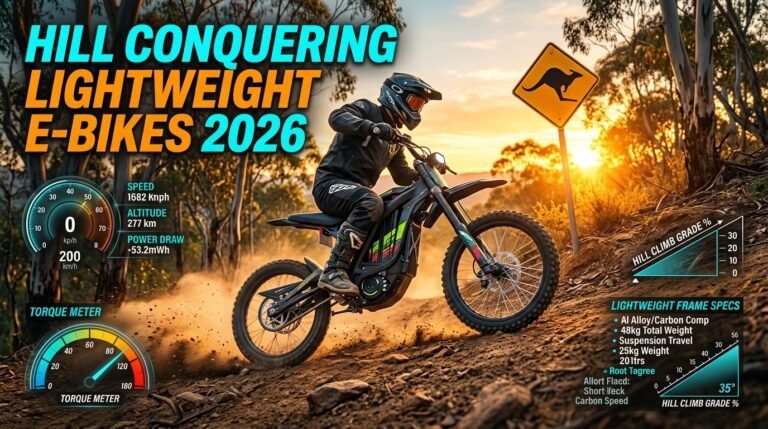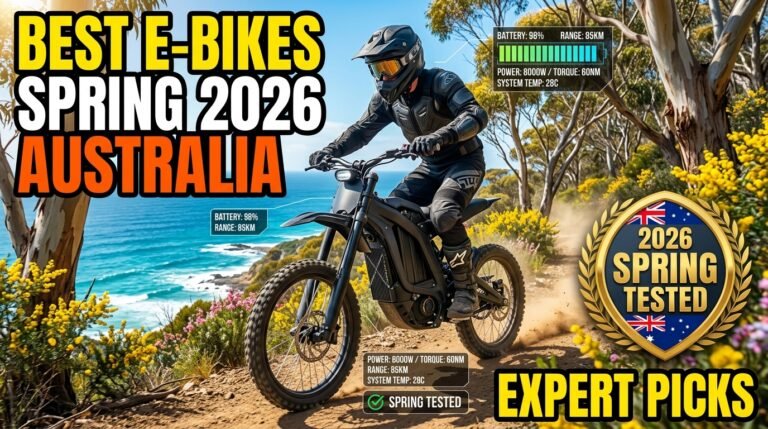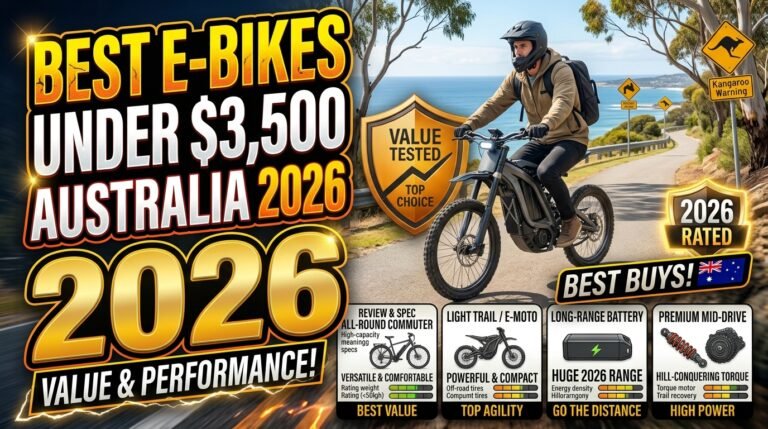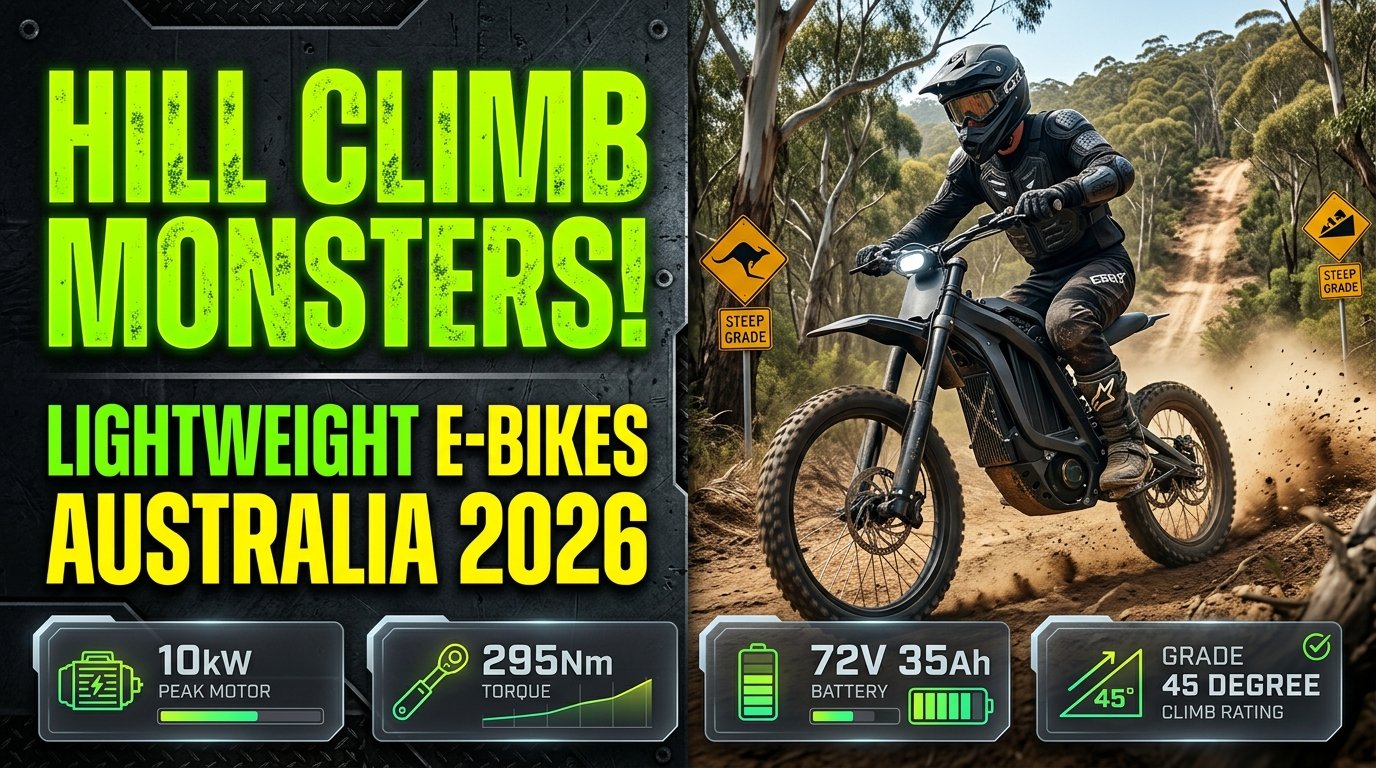

Still Legal in 2026? The Only Compliant Electric Bikes Worth Buying Right Now
If you’re searching for legal electric bikes Australia 2026 buyers can actually ride on public roads and paths, there is one thing you need to understand before looking at motor power, battery size or top speed:
Not every electric bike sold in Australia is a legal e-bike for public use.
A bike can look like a bicycle, have pedals and be advertised as an “e-bike” while still falling outside the rules that apply to bicycles on Australian roads and paths.
In 2026, the safest starting point is to look for a genuine 250W pedal-assist e-bike that cuts motor assistance at 25 km/h and meets the applicable compliance requirements, including EN 15194 where required.
However, state and territory rules can add further requirements. Queensland, for example, introduced major new e-bike rules from 31 August 2026.
This guide explains what to look for before buying an electric bike in Australia and how to avoid accidentally purchasing a machine that cannot legally be used where you intend to ride it.
What Makes an Electric Bike Legal in Australia in 2026?
For most Australian buyers looking for a conventional road-and-path e-bike, the key specifications are:
- Maximum 250W continuous rated motor power
- Pedal assistance rather than motor-only propulsion
- Motor assistance that cuts out at 25 km/h
- Functional pedals
- Appropriate compliance with the relevant Australian requirements
- EN 15194 compliance where required
The Australian Government’s importer guidance says a power-assisted pedal cycle meeting EN 15194 can be treated as a bicycle for the purposes of the relevant federal classification, with a maximum 250W motor and assistance cut-off at 25 km/h.
That does not mean every 250W bike is automatically legal everywhere.
You still need to check the rules in the state or territory where you will ride.
The 250W Rule Explained
One of the biggest sources of confusion is the term 250W.
When checking an e-bike, don’t simply look for a sticker saying “250W”.
The relevant legal specification can refer to maximum continuous rated power, not necessarily the short-term peak output a motor can produce.
A modern e-bike may therefore feel considerably stronger than the simple 250W number suggests.
For example, a quality mid-drive system can provide strong climbing assistance because it works through the bicycle’s gearing.
This is why comparing e-bikes solely by advertised wattage is misleading.
The 25 km/h Assistance Limit
A compliant EPAC does not suddenly stop the bicycle from physically travelling faster than 25 km/h.
Instead, the electric assistance must cut out at 25 km/h.
You can continue riding faster through your own pedalling, downhill momentum or other human input where permitted.
Victoria explicitly states that an EPAC must cut motor assistance at 25 km/h, while the rider can travel faster through pedalling without electric assistance.
This distinction matters.
A bike advertised as:
“25 km/h electric assistance”
is very different from a bike advertised as:
“45 km/h electric bike”
The second machine may fall into a completely different legal category.
What About Throttles?
Throttle systems are another major area of confusion.
A compliant EPAC can have limited low-speed assistance for starting or “walk mode” purposes.
Victoria allows throttle assistance up to 6 km/h, but does not permit throttle propulsion above that threshold for an EPAC.
Queensland’s current rules similarly specify that throttle-controlled assistance can be used only up to 6 km/h to help the rider start moving.
So if you’re shopping for a road-and-path e-bike, be very cautious about listings that advertise:
- Full-throttle operation
- No-pedal riding
- 750W throttle
- 1000W throttle
- 1500W peak motor
- 45 km/h throttle speed
Those specifications can indicate that you’re looking at something other than a conventional legal EPAC.
EN 15194: The Compliance Standard Buyers Need to Know
EN 15194 is the European standard for electrically power-assisted cycles, commonly referred to as EPAC.
It is increasingly important in Australia’s e-bike market.
The Australian Government’s importer guidance identifies an EN 15194-compliant power-assisted pedal cycle as the type of e-bike that may be considered a bicycle for federal import classification.
Queensland’s 2026 rules are particularly explicit.
For public use, Queensland requires e-bikes to meet EN 15194 and display the appropriate compliance label, subject to its transition and assurance arrangements.
Victoria also advises buyers to look for an e-bike complying with EN 15194 before purchasing.
What should buyers look for?
Look for:
EN 15194
on the compliance documentation and, where required, the bike’s compliance label.
Don’t rely on a seller simply writing:
“Australian legal.”
Ask for evidence.
Queensland’s New 2026 E-Bike Rules
Queensland deserves special attention because its rules changed significantly in 2026.
From 31 August 2026, riders generally need to be at least 16 years old and hold a valid driver’s licence, including a learner licence, to ride an e-bike. There are exemptions for certain circumstances.
Queensland also specifies:
- Maximum 250W continuous rated motor output
- Pedal-powered operation
- Motor assistance up to 25 km/h
- Maximum 6 km/h throttle assistance
- EN 15194 compliance and labelling, subject to the applicable transition arrangements
The Queensland Government states that high-powered devices above 250W maximum continuous rated power are illegal for public-road and public-path use, even if software has been used to restrict their output.
That last point is particularly important.
“Locked to 250W” Does Not Automatically Make a High-Powered Bike Legal
This is one of the most important warnings for Australian e-bike buyers in 2026.
Some manufacturers and sellers advertise bikes that can supposedly be:
“Unlocked for private property.”
Or:
“Software limited to 250W/25 km/h for road use.”
That does not automatically make the bike compliant.
Queensland’s current government guidance specifically says that a high-powered e-bike that is merely software-locked does not meet the EN 15194 requirement because the underlying motor has a higher maximum continuous rated power.
This is exactly why buyers should look at the actual manufactured specification and compliance documentation, rather than relying on a screen setting.
NSW: 2026 Is Also Getting Stricter
NSW has been moving back toward the 250W framework.
The NSW Government announced in February 2026 that a minimum age for e-bike riding was being introduced as part of broader reforms.
The state also moved to reduce the maximum legal e-bike power output to 250W, bringing NSW back into alignment with the national direction.
There has also been increased enforcement attention around illegal high-powered e-bikes.
For NSW buyers, this means choosing a bike based on its actual legal specification—not simply buying a high-powered model and assuming that a speed limiter makes it compliant.
Victoria: What Counts as a Legal E-Bike?
Victoria currently provides one of the clearest explanations.
A permitted EPAC must:
- Have a maximum continuous rated power of 250W
- Provide assistance while pedalling
- Cut assistance at 25 km/h
- Have functional pedals
- Not provide throttle propulsion above 6 km/h
Victoria also recognises a separate category of low-powered power-assisted pedal cycles with a maximum power output of 200W.
Victoria specifically states that high-power electric dirt bikes, bikes without functional pedals and e-bikes exceeding the permitted power or speed requirements cannot be ridden on public roads and road-related areas.
That includes bike paths, shared paths and footpaths.
Western Australia: Check the EN 15194 Label
Western Australia also distinguishes legal power-assisted pedal cycles from higher-powered devices.
WA states that a Pedalec complying with EN 15194 can have:
Up to 250W
with electric assistance cutting out at:
25 km/h
WA also recognises a separate category of power-assisted pedal cycles with up to 200W.
The WA Road Safety Commission advises buyers to look for an EN 15194 compliance sticker as a straightforward way to identify a legal Pedalec.
What About South Australia, Tasmania and the Other States?
The important point is that Australian e-bike rules are not one single national riding law.
The Australian Government specifically directs buyers to check the rules for their individual state or territory after considering the federal classification requirements.
That means your buying checklist should always include:
1. Federal classification
2. State or territory road rules
3. Actual bike specification
4. Compliance documentation
5. Where you intend to ride
This is especially important when purchasing online from overseas sellers.
Which Electric Bikes Should You Look for in 2026?
For riders who want a conventional e-bike for public roads and paths, the safest product category to focus on is:
250W EN 15194 Pedal-Assist E-Bikes
Look for:
- 250W maximum continuous rated motor
- 25 km/h assistance cut-off
- Pedal assistance
- Functional pedals
- 6 km/h or less walk/throttle assistance where permitted
- EN 15194 compliance
- Appropriate compliance label
- Reliable battery and charger
- Proper brakes
- Manufacturer documentation
This category includes many modern:
- Commuter e-bikes
- Hybrid e-bikes
- Electric mountain bikes
- Touring e-bikes
- Cargo e-bikes
- Step-through e-bikes
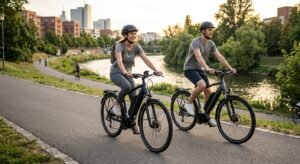
The legal category does not mean the bikes have to be slow or weak.
A good 250W mid-drive e-bike can deliver impressive hill-climbing performance when combined with high torque and suitable gearing.
What About Electric Mountain Bikes?
A legal eMTB can still be an excellent machine.
The key is not whether it looks like a mountain bike.
It’s whether the motor system and configuration meet the relevant requirements.
A compliant eMTB can provide:
- Suspension
- Hydraulic brakes
- Wide tyres
- Multiple gears
- Large battery
- Strong climbing assistance
- Trail-oriented geometry
while remaining within the relevant EPAC classification.
This is where brands using established drive systems from manufacturers such as Bosch, Shimano and similar suppliers can provide a strong combination of performance and documentation.
What About Cargo Electric Bikes?
Cargo e-bikes can also be legal when they meet the relevant requirements.
In fact, Queensland’s government specifically gives e-cargo bikes as an example of legal e-bike designs when they meet the applicable specifications.
For cargo riding, focus on:
- Maximum system weight
- Brake performance
- Frame strength
- Battery capacity
- Motor torque
- Tyre load rating
- Rack capacity
- Child/passenger provisions where applicable
Don’t simply choose the highest-powered cargo bike.
The legal specification matters.
What About Sur-Ron, Talaria and E Ride Pro?
This is where many Australian buyers make a serious mistake.
Sur-Ron, Talaria and E Ride Pro machines are not automatically legal e-bikes simply because they have electric motors and pedals.
High-powered electric dirt bikes are a separate category from conventional 250W EPACs.
Victoria explicitly identifies high-power electric dirt bikes as unable to be ridden on public roads and road-related areas when they fall outside the permitted e-bike requirements.
Queensland likewise distinguishes electric motorcycles and dirt-bike-style vehicles from legal e-bikes. High-powered devices that do not comply with its e-bike requirements cannot be used on public roads or paths.
These machines can still have a legitimate purpose.
For example:
- Private property
- Motocross tracks
- Approved off-road areas
- Competition
- Properly registered motorcycle use where the specific vehicle qualifies
But do not buy a high-powered electric dirt bike assuming it is a road-legal e-bike.
The “750W E-Bike” Problem
Search online and you’ll find thousands of listings advertising:
750W electric bike
1000W electric bike
1500W electric bike
2000W electric bike
These numbers alone don’t tell you whether the bike is legal for public use.
A high-powered machine may be perfectly legitimate for a particular private-property application while being prohibited from public roads and paths.
Queensland’s current rules specifically identify examples such as a 1000W, 50 km/h device as an illegal public-use e-bike, and state that high-powered devices remain prohibited even when electronically restricted.
The same basic principle should guide buyers across Australia:
Don’t confuse “available for sale” with “legal to ride on public roads.”
What About Conversion Kits?
Conversion kits deserve extra caution.
A normal bicycle converted with a motor and battery can potentially fall within the legal requirements if the finished bike meets the applicable rules.
But modifications that increase power or speed can move the bike outside the legal category.
Victoria states that converted e-bikes must still meet its e-bike requirements to be ridden legally on public roads and shared paths. It also has separate restrictions on carrying converted e-bikes on public transport.
Queensland’s current guidance is even more explicit: post-manufacture modifications that take an e-bike outside EN 15194 compliance can make the device illegal for public use.
How to Check an E-Bike Before You Buy
Before paying for an electric bike, ask the seller these questions:
1. What is the maximum continuous rated motor power?
Not just peak power.
2. Does motor assistance stop at 25 km/h?
Ask for documentation.
3. Does the bike require pedalling?
A full-throttle machine is a major warning sign.
4. Is the bike EN 15194 compliant?
Ask for evidence.
5. Where is the compliance label?
Don’t accept vague answers.
6. Is the exact model approved for Australian use?
Check the exact model—not just the brand.
7. What state are you riding in?
The riding rules can differ.
8. Has the bike been modified?
A limiter or software setting doesn’t necessarily make an otherwise non-compliant machine legal.
A Simple 2026 Legal E-Bike Checklist
Before buying, look for:
✓ 250W maximum continuous rated power
✓ Pedal assistance
✓ 25 km/h motor assistance cut-off
✓ Functional pedals
✓ EN 15194 compliance where applicable
✓ Correct compliance label
✓ Genuine manufacturer documentation
✓ Compatible battery and charger
✓ No illegal post-manufacture power modification
✓ State/territory requirements checked
If a seller cannot provide clear answers, don’t guess.
Are Legal 250W E-Bikes Too Weak for Australian Hills?
No.
This is another common misconception.
Motor power alone doesn’t determine climbing ability.
A well-designed 250W mid-drive system can provide strong assistance because the motor operates through the bicycle’s gearing.
For steep Australian terrain, look for:
- High torque
- Mid-drive motor
- Wide-range gearing
- Appropriate tyre grip
- Good battery capacity
- Strong hydraulic brakes
A legal eMTB can therefore be very capable on hills while remaining within the applicable EPAC category.
Battery Safety Matters Too
Legal compliance isn’t only about motor power.
Battery quality matters.
Victoria advises buyers to purchase batteries and chargers from reputable suppliers and follow manufacturer charging instructions. It also highlights standards and compliance marks relevant to battery and electrical safety.
Avoid:
- Damaged batteries
- Swollen batteries
- Unapproved chargers
- Homemade battery packs
- Poor-quality wiring
- Unknown replacement batteries
Never assume that a cheap battery is equivalent to an original manufacturer battery simply because the voltage and capacity appear similar.
So, Which Electric Bikes Are Worth Buying in 2026?
Rather than choosing a bike simply because it has the largest battery or motor, look for a properly documented, compliant e-bike that matches how you actually intend to ride.
For commuting
Look for:
250W EPAC + 25 km/h assistance + 400–600Wh battery
For hills
Look for:
250W mid-drive + high torque + wide-range gearing
For trail riding
Look for:
Compliant eMTB + suspension + hydraulic brakes + suitable tyres
For cargo
Look for:
Compliant cargo e-bike + high system weight rating + strong brakes
For serious off-road performance
Consider:
Sur-Ron, Talaria, E Ride Pro or another electric dirt bike
—but treat these as a separate vehicle category and verify where the exact model can legally be ridden.
The Bottom Line: Still Legal in 2026?
Yes—properly compliant pedal-assist electric bikes remain legal in Australia in 2026, but the exact requirements depend on the jurisdiction and the bike’s configuration.
The safest general specification for a conventional public-use e-bike is:
250W maximum continuous rated motor power + pedal assistance + 25 km/h assistance cut-off + appropriate compliance, including EN 15194 where required.
The Australian Government confirms the importance of the 250W/25 km/h/EN 15194 framework for determining whether an e-bike can be treated as a bicycle at the federal level, while state and territory governments set the rules for use where you ride.
Queensland’s new rules demonstrate why buyers need to stay current: from 31 August 2026, additional rider age and licensing requirements apply, alongside stricter compliance requirements.
So don’t ask only:
“How powerful is this e-bike?”
Ask:
“Is this exact configuration compliant for where I intend to ride?”
That is the question that can save you from buying an expensive machine you cannot legally use on public roads or paths.
At ELECTRICK PTY LTD, our range covers both conventional electric bikes and high-performance electric dirt bikes. The important distinction is understanding which machine is designed for commuting and public bicycle infrastructure, and which is intended for private-property or off-road riding.
Shop ELECTRICK’s electric bike range, or contact our team before purchasing if you’re unsure about a model’s specifications or intended use.
Frequently Asked Questions
Are electric bikes still legal in Australia in 2026?
Yes. Compliant electric bicycles remain legal, but requirements vary between states and territories. The common EPAC framework centres on 250W maximum continuous rated power, pedal assistance and a 25 km/h assistance cut-off, with EN 15194 relevant to the classification and compliance requirements.
Is 250W still legal for e-bikes in Australia?
Yes, 250W maximum continuous rated power remains central to the EPAC framework used across Australia. However, riders must also comply with the specific rules in their state or territory.
Is a 750W e-bike legal in Australia?
A 750W e-bike is not automatically a legal public-use bicycle. If it exceeds the applicable maximum continuous rated power, it may fall outside the legal e-bike category. Queensland explicitly prohibits e-bikes above 250W maximum continuous rated power from public roads and paths.
Is a 1000W e-bike legal?
Not as a conventional public-use EPAC where the applicable limit is 250W maximum continuous rated power. A 1000W machine may belong to another vehicle category or be restricted to private property depending on its design and jurisdiction.
Can a 750W e-bike be software-limited to 250W?
Do not assume that software limiting makes it legal. Queensland’s current guidance specifically states that high-powered e-bikes merely locked via software do not meet its EN 15194 requirements.
Are Sur-Ron and Talaria legal e-bikes?
Not automatically. High-powered electric dirt bikes are not equivalent to conventional 250W EPACs. Their permitted use depends on the exact model, approval status, registration requirements and riding location.
Can I ride a legal e-bike faster than 25 km/h?
You can physically travel faster than 25 km/h through your own pedalling or downhill momentum, but the motor assistance must cut out at the applicable 25 km/h threshold for an EPAC.
Do legal e-bikes need registration?
A compliant bicycle-class e-bike generally does not require motor-vehicle registration, but state-specific requirements still apply. For example, Victoria states that registration and licensing are not required when the e-bike meets its legal requirements.
What should I check before buying an electric bike in Australia?
Check the motor’s maximum continuous rated power, assisted speed, pedal operation, EN 15194 compliance where applicable, compliance labelling, battery/charger documentation and the rules in your state or territory.