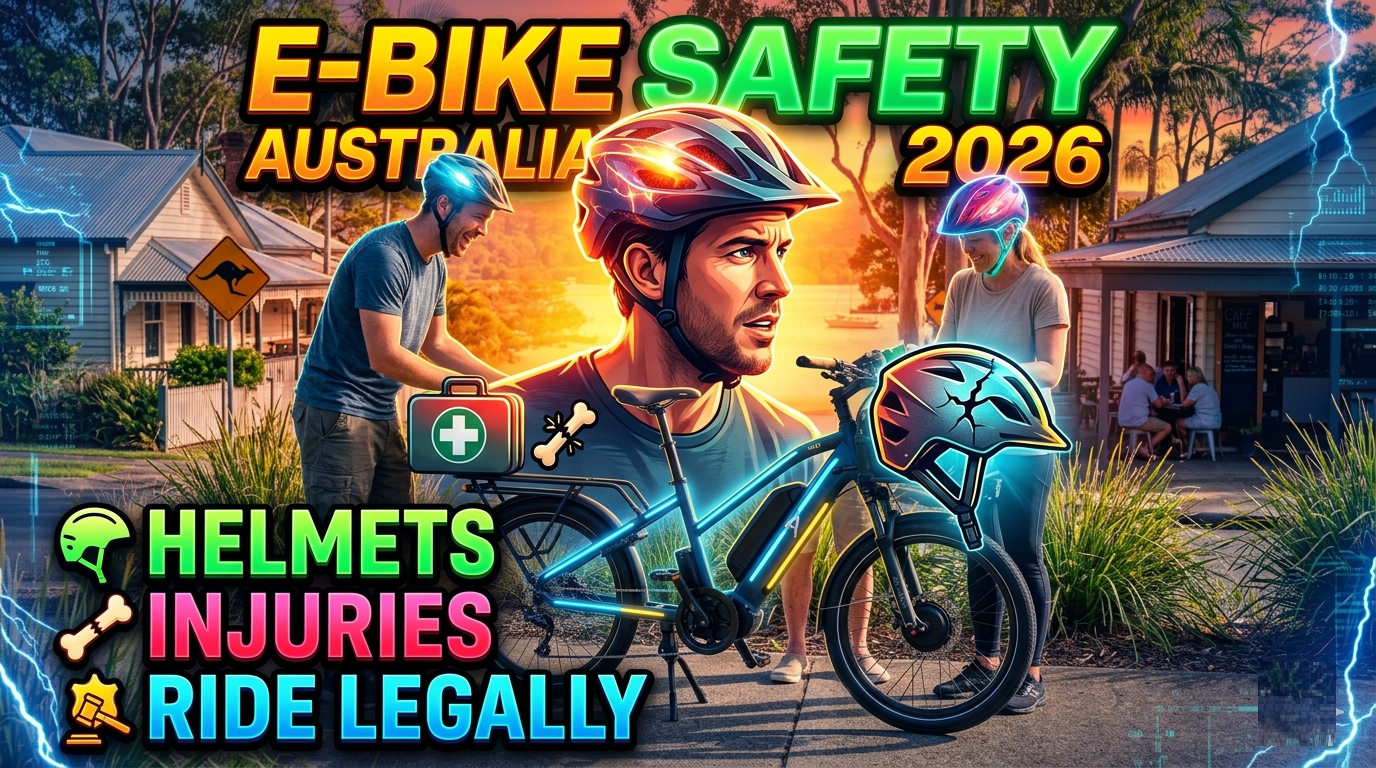

E-Bike Safety Australia 2026: Helmets, Injuries & How to Ride Legally
Understanding e-bike safety Australia 2026 is essential as electric bikes and high-performance e-motos become more powerful and widespread across Australia. With Sur-Ron, Talaria, Segway, and commuter e-bikes sharing roads, bike paths, and off-road trails, safety is no longer optional—it is critical.
This guide covers helmet laws, injury risks, safe riding practices, and legal compliance so you can ride confidently and avoid fines or accidents.
Why E-Bike Safety Matters More in 2026
E-bike adoption in Australia has increased sharply. However, higher speeds and stronger torque systems mean increased risk when riders are untrained or unprotected.
Key risks include:
- Higher acceleration than traditional bicycles
- Reduced reaction time in traffic
- Increased injury severity in crashes
- Off-road terrain hazards with e-moto bikes
As a result, e-bike safety Australia 2026 regulations and awareness campaigns are becoming stricter nationwide.
Helmet Laws in Australia (2026 Update)
Helmet use is mandatory across all Australian states and territories.
Approved Helmet Requirements
Riders must wear helmets that meet Australian safety standards (AS/NZS 2063).
Key rules:
- Helmet must be securely fastened
- Must be worn on all roads, paths, and shared zones
- Applies to both e-bikes and high-power electric dirt bikes
However, many injuries still occur due to improper helmet use or low-quality gear.
A properly fitted helmet significantly reduces the risk of head trauma in both low-speed and high-speed crashes.
Common E-Bike Injuries in Australia
Understanding injury patterns is critical for improving e-bike safety Australia 2026 awareness.
1. Head Injuries
Most serious incidents involve riders without properly fitted helmets or those using non-certified helmets.
2. Wrist and Arm Fractures
Common during falls caused by sudden braking or loss of traction.
3. Shoulder Injuries
Often occur when riders are thrown from high-power e-motos like Sur-Ron or Talaria.
4. Lower Body Injuries
Includes knee and ankle damage from off-road crashes or high-speed impacts.
Additionally, off-road riding significantly increases injury risk due to uneven terrain and higher speeds.
Safe Riding Practices for E-Bikes
1. Control Your Speed
Always match your speed to your environment. Even powerful bikes like Sur-Ron or Segway should be ridden responsibly in public or shared areas.
2. Understand Your Bike’s Power
Lightweight e-motos deliver instant torque. Therefore, inexperienced riders should start in low power modes.
3. Maintain Your Brakes
Hydraulic brakes are strongly recommended for all high-performance electric bikes.
4. Wear Protective Gear
Beyond helmets, riders should use:
- Gloves
- Knee pads
- Riding boots
- Protective jackets
5. Ride Predictably
Avoid sudden movements, especially in traffic or shared paths.
Legal Riding Rules in Australia
E-bike safety is closely linked to legal compliance.
Road-legal e-bikes:
- 250W motor limit
- 25 km/h assistance cutoff
- Pedal-assist required
High-performance e-motos (Sur-Ron, Talaria, Segway):
- Typically off-road or private property use only
- May require registration if modified for road use
- Subject to state enforcement laws
Therefore, always verify legality before riding in public areas.
Off-Road Safety (Sur-Ron & Talaria Riders)
Off-road electric bikes require additional caution due to speed and terrain variability.
Key risks:
- High-speed collisions on trails
- Sudden terrain changes
- Reduced visibility in bushland
- Battery-related weight distribution changes
Best practices:
- Ride in groups when possible
- Inspect trails before high-speed riding
- Use full protective gear
- Avoid riding at night without proper lighting
Battery Safety and Fire Risk Awareness
Battery safety is part of modern e-bike safety Australia 2026 concerns.
Safe practices:
- Use manufacturer-approved chargers
- Avoid water damage
- Do not overcharge batteries
- Store in cool, dry environments
Poor-quality aftermarket batteries increase fire risk and reduce performance.
Rider Responsibility and Legal Liability
Riders are legally responsible for their behaviour on public roads and shared paths.
Violations may include:
- Riding without a helmet
- Exceeding speed limits
- Using non-compliant e-bikes on roads
- Reckless riding in pedestrian zones
Penalties vary by state but may include fines and bike confiscation.
How to Choose a Safer Electric Bike
When selecting an electric bike in Australia, prioritise:
- Braking system quality (hydraulic preferred)
- Frame stability
- Manufacturer compliance
- Weight distribution
- Local support and servicing
Brands like Sur-Ron, Talaria, and Segway offer strong performance, but safety depends heavily on rider behaviour and setup.
FAQ
Is helmet use mandatory for e-bikes in Australia?
Yes. All riders must wear an approved helmet under Australian law.
What are the most common e-bike injuries?
Head injuries, wrist fractures, and shoulder injuries are the most common.
Are Sur-Ron and Talaria safe?
Yes, when used responsibly with proper protective gear and controlled riding.
Can I ride fast e-bikes on public roads?
Only compliant low-power e-bikes are legally allowed on public roads without registration.
Visit our website:
Follow ELECTRICK PTY LTD
Stay updated with new products, riding tips and Australian electric bike news.