5 Costly Mistakes Australians Are Still Making When Buying Electric Bikes in 2026
The biggest electric bike mistakes Australian buyers make in 2026 often happen before they even take their first ride. A low advertised price, impressive motor specifications or a claimed range of 100 kilometres can look attractive. However, the wrong purchase can leave you with an unsuitable bike, unexpected expenses, battery concerns or a vehicle you cannot legally ride where you intended.
The Australian electric-bike market includes conventional pedal-assist bicycles, electric mountain bikes, cargo e-bikes and high-powered electric dirt bikes. These machines are not interchangeable, and their intended uses and legal requirements can differ significantly.
Before you buy, learn to recognise these five costly electric bike mistakes. A few checks now could save you money, frustration and safety risks later.
Mistake 1: Buying an Electric Bike Without Checking Its Legality
One of the most serious electric bike mistakes is assuming that every model advertised for sale in Australia is legal to ride on public roads or shared paths.
That assumption can be expensive.
A bike may have pedals, a battery and an electric motor, but those features alone do not establish that it qualifies as a conventional road-use e-bike. Motor power, assistance behaviour, throttle operation, design and vehicle classification can all matter.
The Australian Government’s guidance explains that certain power-assisted pedal cycles meeting the relevant EN 15194 criteria may be treated as bicycles. Other powered vehicles can fall under different requirements. State and territory rules also affect where and how you can ride. Check the Australian Government’s e-bike guidance before purchasing an unfamiliar model.
What should you check before buying?
- Confirm the exact model and its intended use.
- Check the manufacturer’s specifications and compliance documentation.
- Verify the requirements in your state or territory.
- Confirm whether the bike is approved for public-road use if that is your intention.
- Do not rely solely on a seller’s claim that a model is “street legal”.
This is especially important when buying online or importing a bike from overseas. A product sold in another country may not meet Australian requirements.
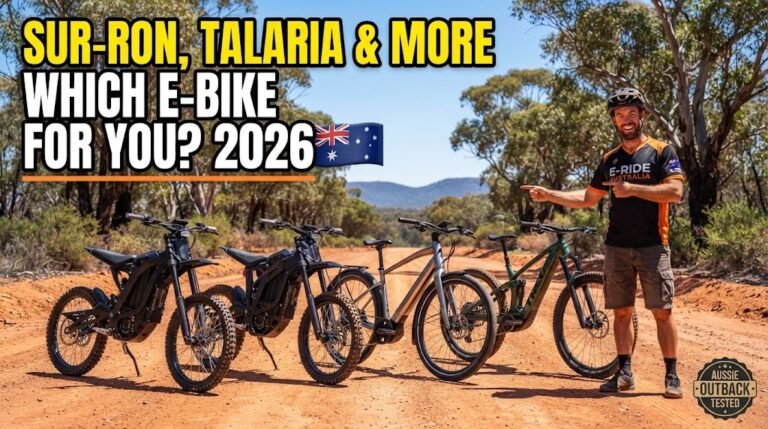
What about Sur-Ron, Talaria and electric dirt bikes?
High-powered electric dirt bikes and e-motos require particular care. A Sur-Ron or Talaria-style machine should not automatically be treated as a conventional pedal-assist bicycle.
Some models are designed primarily for off-road use. Whether a particular machine can be registered or used on public roads depends on its specifications, approval status and applicable requirements.
The lesson: establish where you can legally ride the exact model before paying for it.
Mistake 2: Believing the Advertised Battery Range
Another common electric bike mistake is choosing a model based on its maximum advertised range without considering real riding conditions.
A claimed range of 100 km does not mean you will consistently travel 100 km on a single charge.
Actual range can change considerably depending on:
- Rider weight and carried cargo
- Hills and elevation changes
- Wind and weather
- Tyre pressure and surface conditions
- Motor assistance level
- Riding speed and acceleration
- Battery age and condition
For example, a rider travelling on flat paths with low assistance may achieve a very different result from someone climbing steep hills with a heavy load.
Understand battery capacity
Battery capacity is usually measured in watt-hours (Wh). A larger capacity generally means more stored energy, but it does not guarantee a particular distance.
When comparing electric bikes, look at the battery capacity alongside the motor system, bike weight and your usual route.
Think about your daily journey and allow a sensible reserve rather than planning to arrive with almost no battery remaining.
Ask the seller these questions
- What is the battery capacity in Wh?
- Is the advertised range based on controlled conditions or typical riding?
- Is the battery removable?
- What is the replacement battery cost and availability?
- What warranty applies to the battery?
- Is the supplied charger specifically compatible with the battery?
The lesson: choose a battery for your real riding needs, not the most impressive number in an advertisement.

Mistake 3: Choosing the Cheapest Bike Without Checking Battery Safety and Support
A low price can be tempting, particularly when two electric bikes appear similar online. However, one of the costliest electric bike mistakes is comparing the purchase price without checking the battery, charger, parts availability and after-sales support.
Lithium-ion batteries store substantial energy. Faulty, damaged, incompatible or improperly handled batteries can catch fire. The ACCC warns consumers to buy from reputable suppliers and follow the manufacturer’s instructions for use, charging and storage. Read the ACCC’s lithium-ion battery safety guidance.
Check the complete electrical system
Before purchasing, check whether the bike comes with:
- A battery designed for that exact model
- A compatible manufacturer-approved charger
- Clear charging and storage instructions
- Accessible warranty and service support
- Replacement batteries and parts that can be sourced
- Clear documentation about the electrical system
Do not assume that a charger with a matching plug is compatible. Voltage, charging specifications and battery management systems matter.
Be cautious if a seller cannot explain the battery’s origin, provide product documentation or identify a suitable replacement. An inexpensive bike can become poor value if a key component fails and cannot be replaced.
Understand warranty and servicing
Ask who handles warranty claims and where repairs are performed. Find out whether common wear parts, such as brake pads, tyres and drivetrain components, are readily available.
Also check the warranty terms carefully. Battery coverage may differ from coverage for the frame, motor and other components.
Charge and store batteries safely
Use the supplied compatible charger and follow the manufacturer’s instructions. Avoid charging a damaged battery, modifying the battery pack or leaving charging equipment in unsuitable conditions.
If a battery becomes unusually hot, swollen, damaged or emits an unusual smell, stop using it and follow official safety advice.
The lesson: compare the whole ownership experience, not just the checkout price.


Mistake 4: Buying the Wrong Bike for Your Riding Style
Some electric bike mistakes come down to choosing the wrong category.
A powerful-looking bike is not necessarily the best commuter, and a comfortable city bike is not necessarily suitable for demanding mountain-bike trails.
Before comparing brands, decide what you will use the bike for most often.
For commuting
Look for a comfortable riding position, dependable brakes, useful lights, practical gearing and the ability to carry your everyday essentials. A rear rack and mudguards can make daily riding easier.
For hills and longer trips
Pay attention to motor characteristics, gearing, battery capacity and overall weight. Strong assistance can help on climbs, but it is only one part of the bike’s performance.
For trails and mountain biking
Consider an eMTB designed for the terrain you intend to ride. Suspension, tyre grip, braking performance, frame geometry and durability matter more than simply choosing the largest battery.
For cargo and family use
Check the manufacturer’s permitted load, passenger provisions and accessory compatibility. Do not assume a standard rack is suitable for carrying a child or another passenger.
For high-powered off-road riding
Electric dirt bikes and e-motos serve a different purpose from conventional commuter e-bikes. Compare the exact machine’s intended use, maintenance requirements, protective equipment needs and permitted riding locations.
The best choice is the bike that matches your real riding conditions. Buying a specialist machine for the wrong purpose can leave you paying for features you do not need while missing the ones you do.


Mistake 5: Ignoring the Total Cost of Ownership
The final mistake is focusing entirely on the advertised price.
The purchase price is only one part of the cost of owning an electric bike. Accessories, servicing, consumables and eventual battery replacement can all affect long-term value.
Costs to include in your budget
Safety equipment: A suitable helmet, lock and any necessary lights or visibility equipment.
Maintenance: Brake pads, tyres, drivetrain servicing and other wear items.
Battery and charging: Replacement battery costs, if required, and safe charging arrangements.
Repairs and parts: Labour, specialist components and shipping for replacement parts.
Storage and transport: Secure storage, carrying equipment or a suitable vehicle rack.
Off-road equipment: For electric dirt-bike riding, appropriate protective gear and more specialised maintenance may be necessary.
Compare value, not just price
A slightly more expensive bike may be better value if it has a suitable battery system, reliable brakes, accessible parts and useful warranty support.
Equally, a premium model is not automatically worth the extra money if you only need a simple bike for short, flat journeys.
Make a shortlist of two or three models. Compare their specifications, warranty conditions, intended use and total expected costs. Then choose the one that meets your requirements without paying for unnecessary features.


A Quick Checklist Before You Buy an Electric Bike
Before placing your order, make sure you can answer these questions:
- Does this exact model meet the requirements for my intended riding location?
- Is the battery and charger suitable, documented and supported?
- Is the advertised range realistic for my routes?
- Does the bike fit my body and riding style?
- Can I obtain replacement parts and servicing?
- Have I budgeted for safety equipment and maintenance?
- Do I understand the warranty and return conditions?
If you cannot answer one of these questions, get clarification before purchasing.
Final Verdict: Avoid These Electric Bike Mistakes in 2026
The most expensive electric bike mistakes are often preventable. Check legality before buying, treat advertised battery range as an estimate, investigate battery safety and support, match the bike to your riding style, and calculate the full cost of ownership.
These checks matter whether you want a commuter e-bike, an electric mountain bike or a high-powered electric dirt bike. The details differ, but the principle stays the same: understand what you are buying before you pay.
If you are comparing options, explore the ELECTRICK shop and the electric dirt bike range. If you need help identifying a suitable model, contact ELECTRICK before making your decision.
FAQ section
What is the biggest mistake when buying an electric bike in Australia?
Assuming that every electric bike sold in Australia is legal for public-road use. Check the exact model’s classification, specifications and the rules that apply where you intend to ride.
How can I avoid buying an unsafe electric bike?
Buy from a reputable supplier, check the battery and charger documentation, confirm compatibility, review warranty support and follow the manufacturer’s charging and storage instructions.
Is the advertised electric bike range accurate?
Advertised range is an estimate. Hills, rider weight, wind, temperature, tyre pressure, battery condition and assistance level can all affect the distance you achieve.
Are cheap electric bikes worth buying?
Some affordable models offer good value, but compare battery quality, brakes, warranty, replacement parts and servicing before deciding. A low purchase price does not guarantee low ownership costs.
Are Sur-Ron and Talaria models legal on Australian roads?
Do not assume that they are. Legality depends on the exact model, its approval and classification, and the applicable rules. Confirm its permitted use before buying.
What extra costs should I budget for?
Allow for safety equipment, locks, servicing, tyres, brake pads, replacement parts and eventual battery replacement. Specialist electric dirt bikes may also require additional protective equipment and maintenance.